Viral vs Bacterial Infections
Children get sick often, especially during the winter months. It can feel like your child has been sick all winter, but this is very common. Most children can have up to 10 illnesses in a year.
As children grow, they are exposed to new viruses and bacteria, which helps their immune system learn how to protect the body. Frequent colds or viral infections are a normal part of this process and do not mean there is a problem with your child’s immune system.
Viral Infections (Viruses)
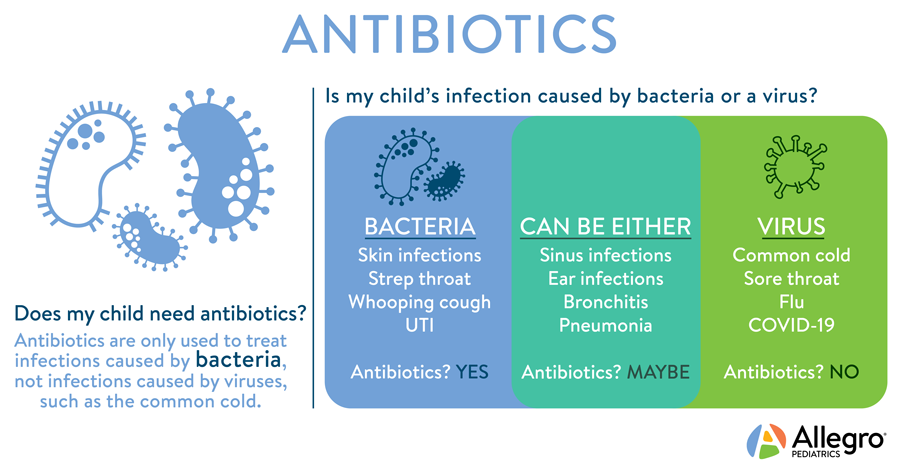
The majority of childhood illnesses are viral infections also known as viruses. Examples of viral infections include a cold, a stomach bug, the flu or COVID.
What is a viral infection?
Viral infections can be spread easily especially in closed environments such as home, daycare, school and workplace. Viruses can be spread through direct contact with someone who is sick or from touching surfaces that someone who is sick has touched.
Are viral infections contagious?
No, viral infections do not need antibiotics. Your child's immune system will fight off the viral infection in time. Most viral infections can take up to two weeks to improve, and fevers may come and go during this period.
Do antibiotics work on viruses?
Bacterial Infections
What is a bacterial infection?
Bacterial infections are less common than viral infections but do still occur in children. Examples of bacterial infections include; strep throat, bacterial pneumonia, bacterial ear infections, or skin infections.
Are bacterial infections contagious?
Some bacterial infections are contagious and can spread from person to person, such as strep throat and impetigo. Many bacterial infections, including pneumonia, ear infections, and sinus infections, are not contagious and cannot be passed to others.
Do antibiotics work on bacterial infections?
Bacterial infections often cause fevers that last several days and do not go away on their own. Antibiotics should not be used for fever alone or for a sore throat without proper testing, such as a throat swab.
Antibiotics should only be used when a bacterial infection has been confirmed. While antibiotics are important when needed, they can have side effects, including rash, joint swelling, severe diarrhea, and antibiotic resistance. In some cases, these side effects can be serious and may require hospitalization.
Viral Infections (Viruses)
Bacterial Infections
Very common in children
Less common in children
Spreads easily through touch and shared spaces.
Some spread from person to person; many do not.
Antibiotics do not work; the body fights it off.
Needs antibiotics.
Strep throat, pneumonia, ear or skin infections.
Cold, stomach bug, flu, COVID.
Will last until treated.
Can last up to two weeks.
Fevers stay for days and don't go away on their own.
Fevers can come and go.
Proactive Prevention: Managing Your Family’s Health
While many childhood illnesses are common, several evidence-based strategies can significantly reduce the risk of infection and community spread. Your actions can help reduce the likelihood of antibiotic-resistant infections and minimizing the time your child spends away from their normal routine.
Hand Hygiene: Your Primary Defense
The most effective way to interrupt the transmission of both viruses and bacteria is consistent handwashing. Ensure your child washes their hands thoroughly with soap and water during these three critical times:
Before meals and snacks.
After using the restroom.
After wiping or blowing their nose.
Coughing and Sneezing: Smarter Habits for Kids
To prevent germs from settling on hands and shared surfaces, teach children to practice a "shield" technique. Encourage them to cover their mouth and nose with a tissue or the crook of their elbow whenever they cough or sneeze. This simple habit keeps common touchpoints such as doorknobs and toys much cleaner for everyone.
The Importance of Routine Vaccines
Staying current with all recommended vaccinations is the most effective way to provide your child with an inner shield against serious illness. This includes ensuring they receive their annual flu shot to help keep them healthy and active throughout the season.